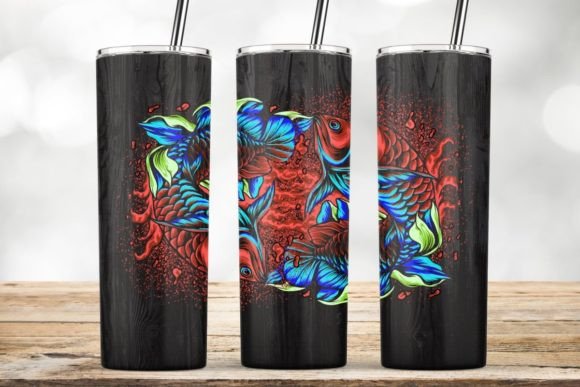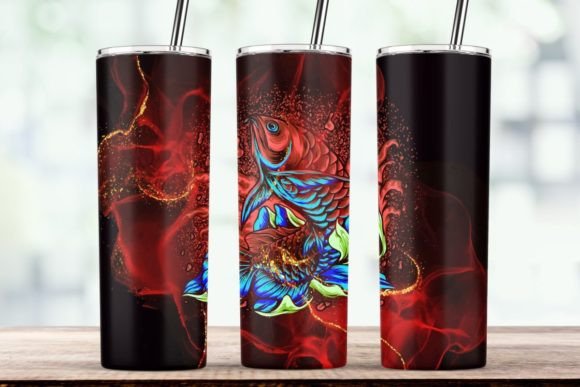
Fishing Tumbler Arowana Fish Tumbler PNG
First Impressions: Bold, Fluid, and Instantly Recognizable
When I opened the Fishing Tumbler Arowana Fish Tumbler PNG, my eye went straight to the silhouette—clean, elongated, and full of motion. The arowana fish is rendered with strong contour lines and subtle internal detail that suggests scale texture without overloading the shape. It’s not overly ornate, but it carries weight: confident, aquatic, and quietly elegant. As a designer who regularly selects embroidery assets for client work, I immediately pictured this on a heavyweight cotton tote bag for a boutique fishing lodge—or stitched onto a navy sweatshirt for a small-town angling club’s annual event. The design feels like it belongs in real life, not just on screen.
Where This Design Truly Shines
The Fishing Tumbler Arowana Fish Tumbler PNG excels where clarity, storytelling, and brand cohesion matter most. I recently used a version of this motif (after converting and digitizing it properly) on a custom embroidered apron for a local seafood restaurant’s staff. Customers noticed it right away—not just as decoration, but as a quiet signal of craft and identity. That’s the power of a well-chosen fish motif: it’s universally legible, culturally resonant (especially in Asian and tropical markets), and commercially versatile.
- Custom apparel: Works beautifully on crewnecks, hoodies, and structured caps—especially when placed front-and-center or along a sleeve seam.
- Tote bag design & pillow covers: Its horizontal flow suits wrap-around placements and large-format stitching without distortion.
- Baby embroidery & nursery decor: Softened with pale thread palettes (mint, dove gray, cream), it reads gentle and meaningful—not aggressive or overly technical.
- Holiday embroidery & personalized gifts: Paired with simple monograms or seasonal accents (a single leaf, wave line), it elevates handmade product value instantly.
- Etsy seller & small shop product: As part of a coordinated set—say, matching tea towels, oven mitts, and embroidered coasters—it builds cohesive design assets customers remember.
What to Watch For in Real Embroidery Use
This isn’t a “drop-in-and-stitch” file—it’s a graphics asset meant for adaptation. Because it arrives as a PNG, you’ll need to digitize it thoughtfully for machine embroidery use. That means paying close attention to stitch density, satin stitch width on fins and tail, and fill stitch behavior across the body. On thin fabric like baby onesies or lightweight linen tea towels, dense fills can cause puckering; on stretchy knits, under-digitized outlines may distort during hooping.
I tested a digitized version on a curved cap surface—and while the fish’s streamlined shape handled the curve well, the eye detail needed slight simplification to avoid thread breaks. Similarly, on dark fabric, fine interior lines disappeared unless I boosted contrast in the vector stage or added a light underlay stitch. And yes: always test the Fishing Tumbler Arowana Fish Tumbler PNG on scrap fabric first—especially if you’re layering it over textured weaves or quilting cottons where stitch definition softens quickly.
Design Integrity Meets Customer Trust
When customers buy a handmade product, they’re buying intention—not just output. A clean, balanced fish motif like this one signals care. It doesn’t scream “clip art.” Instead, it whispers craftsmanship—especially when executed with thoughtful thread colors (deep teals, metallic silvers, warm ochres) and precise registration. I’ve seen clients hesitate over busy, over-digitized designs; they respond more warmly to simplicity with soul. The Fishing Tumbler Arowana Fish Tumbler PNG delivers that. It supports brand consistency for craft businesses without demanding constant reinterpretation.
That said—don’t assume licensing covers commercial embroidery resale. Since this is categorized under Crafts and labeled Graphics, confirm whether your intended use (e.g., selling finished embroidered patches or digital embroidery files derived from it) falls within permitted terms. When in doubt, reach out to the creator before listing on Etsy or bundling into a craft kit.
Practical Designer Notes You’ll Actually Use
- Start with a black-and-white mockup: Before digitizing, flip the Fishing Tumbler Arowana Fish Tumbler PNG to grayscale. Does the shape hold? Do contours remain distinct? If not, simplify edges early.
- Check hoop size compatibility: The original layout appears optimized for a 4x4 or 5x7 hoop—but verify actual dimensions before scaling. Overscaling risks losing fin detail; underscaling makes the fish feel timid.
- Stabilizer matters more than you think: Use medium-weight cutaway for knits, tear-away for stable wovens, and consider topping for towels or fuzzy fabrics.
- Thread color contrast is non-negotiable: Test three combos: high-contrast (navy fish on ivory), tonal (charcoal on charcoal), and metallic (copper on black). Each tells a different story.
- Inspect tiny details: The gill line and eye highlight are easy to lose in stitch. If your machine struggles with short satin runs, convert those to running stitches or reinforce with underlay.
- Think beyond apparel: This design adapts cleanly to embroidered patches, iron-on applique designs, and even laser-cut leather templates for mixed-media projects.
A Final Thought for Creative Entrepreneurs
The Fishing Tumbler Arowana Fish Tumbler PNG isn’t just another fish graphic. It’s a quiet anchor point—a motif with heritage, movement, and market-ready appeal. Whether you’re stitching for a wedding gift (think: custom oyster bar napkins), launching a coastal-themed Etsy shop, or building a line of boutique kitchen textiles, this design earns its place in your working library. Just remember: great embroidery starts long before the needle drops. It starts with choosing assets that respect both the craft and the customer—and this one does.