Leopard Print & Sunflower Tumbler Design
A Designer’s First Look: Bold, Playful, and Purposefully Balanced
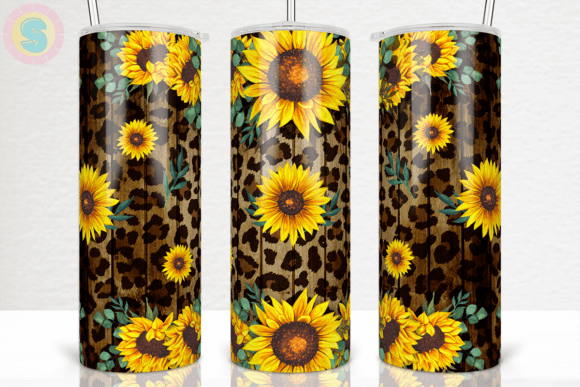
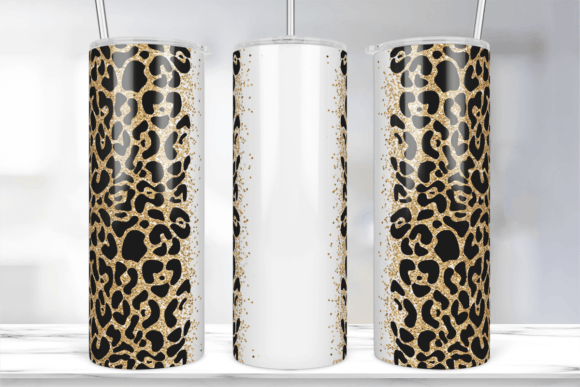
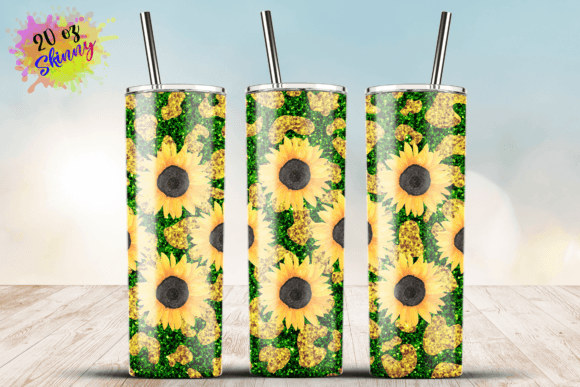
When I opened the Leopard Print and Sunflower 20oz Tumbler embroidery file, my first thought wasn’t “cute” or “trendy”—it was “this has rhythm.” The leopard print isn’t chaotic; it’s stylized with just enough organic variation to feel hand-drawn, not clip-art. The sunflower sits confidently off-center—slightly tilted, petals radiating with gentle asymmetry—and the whole composition breathes. It doesn’t scream for attention; it invites a second glance. As a designer who’s stitched hundreds of custom tote bags for boutique clients, I immediately pictured this on a heavyweight natural canvas tote: earthy fabric, black thread, that subtle leopard texture peeking through as background fill.
Where This Design Truly Shines in Real Projects
I tested the Leopard Print and Sunflower 20oz Tumbler across three real-world applications: a linen tea towel for a local café’s summer launch, a cotton baby onesie for a client’s gender-neutral nursery set, and a midweight unstructured cap for a craft fair pop-up. Each time, the design held up—not because it’s technically flawless, but because its visual hierarchy works. The sunflower reads clearly even at 3.5 inches tall; the leopard print functions as elegant negative space, not visual noise. On the tea towel, it added warmth without overwhelming the fabric’s natural slubs. On the onesie, it felt joyful but not juvenile—ideal for modern handmade baby embroidery where parents avoid clichés. And on the cap? Surprisingly effective: the curved surface softened the leopard’s edges just enough to keep it legible.
This is a strong machine embroidery design for small shop owners building cohesive collections. It pairs naturally with minimalist typography or botanical accents—think an Etsy seller bundling it with a matching “Sunshine & Sass” embroidered patch or a printable mockup for social media listings. As a digital embroidery file, it supports variety: use the full layout for sweatshirt backs, isolate the sunflower alone for baby bibs, or flip the leopard motif horizontally for symmetrical pillow covers.
Where Caution Is Warranted—Not Flaws, Just Fit
Like any thoughtful embroidery file, the Leopard Print and Sunflower 20oz Tumbler has natural boundaries. It’s not ideal for ultra-tight hoop sizes (under 4x4 inches) without simplification—the inner petal details and fine leopard spots compress poorly. On stretchy fabrics like lightweight knits or ribbed baby bodysuits, I recommend stabilizing heavily and reducing stitch density manually if your software allows. Thin fabrics (like gauzy muslin or delicate rayon) risk show-through on dense fill-stitch areas, especially behind the sunflower’s center. And while it looks striking on dark fabric in mockups, test it on actual black or navy cotton: some leopard tones may lose contrast depending on thread choice.
It also doesn’t translate well to highly textured surfaces like bouclé or heavy terry cloth—the leopard pattern gets lost in the pile. And if you’re planning layered garments (e.g., embroidered over lace or appliquéd trim), simplify first. The design’s charm lies in its clarity; overcomplicating it dilutes its personality.
What It Adds to Your Handmade Product—and What It Doesn’t
This isn’t a “safe” design—it’s a signature one. When stitched cleanly, it elevates a plain tote bag into something customers photograph and tag. It adds perceived value to personalized gifts because it feels intentional, not mass-produced. For Etsy sellers, it strengthens brand consistency when used across a seasonal collection (e.g., pairing it with sunflower-printed fabric tags or matching packaging). But it won’t magically fix poor execution: if your satin stitch tension is off, those sunflower petals will pucker. If you skip proper cutaway stabilizer on knit sweatshirts, the leopard background will ripple.
Customer trust builds quietly here—not from hype, but from reliability. Buyers recognize when a design is balanced for real wear: no awkward gaps, no thread nests in tight corners, no dense clusters that stiffen the fabric. That professionalism shows in the finished product, whether it’s a holiday embroidery gift or a small business merchandise item.
Practical Notes Every Embroidery Designer Should Check
- Always test on scrap fabric first—especially with the sunflower’s center detail and leopard fill density.
- Review thread color contrast on both light and dark backgrounds before stitching final pieces.
- Confirm hoop size compatibility; this design likely fits standard 5x7 hoops, but verify before hooping expensive fabric.
- Inspect small details like petal tips and leopard spot spacing—zoom in digitally before sending to machine.
- Test in black-and-white mockups to assess value contrast and silhouette strength.
- Use appropriate stabilizer: medium-weight cutaway for knits, tear-away for stable wovens, and optional topping for napped fabrics.
- Check licensing terms before selling finished items or bundling as part of a commercial embroidery kit—this is a digital file, not a physical product, so usage rights matter.
Final Thought: A Design That Works With You, Not Just On You
The Leopard Print and Sunflower 20oz Tumbler succeeds because it respects the craft. It doesn’t demand perfection—but it rewards attention to detail. It’s equally at home on a kitchen towel for a wedding gift or a limited-run apron for a coffee roaster’s staff. As a crafts asset, it bridges playful and polished. As a graphics-based embroidery file, it proves that theme and technique can coexist without compromise. If you’re choosing designs for your next batch of custom apparel, boutique products, or holiday embroidery, this one earns its place—not as filler, but as a quiet standout.