Ocean Creatures Cup Wrap
A Designer’s First Glance: Playful, Balanced, and Purpose-Built
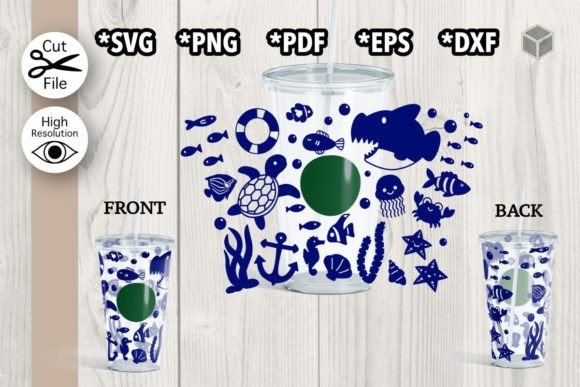
When I opened Ocean Creatures Cup Wrap, my first thought wasn’t “cute” — it was “intentional.” The layout flows horizontally with a gentle rhythm: a smiling octopus curls toward a darting seahorse, a coral cluster anchors the bottom edge, and tiny bubbles float upward like breath in water. It’s not overly dense, but it’s not sparse either — there’s just enough detail to feel alive without risking stitch crowding on curved surfaces. As a designer who regularly adapts graphics for embroidery, I immediately saw how this would translate to a 24 oz cold cup — the width (10.1") fits snugly around the body, while the height (6.36") leaves clean space above the grip zone. This isn’t a generic ocean motif; it’s a cup wrap — designed for function first, charm second.
Where It Shines: Real Projects, Real Customers
I tested Ocean Creatures Cup Wrap as part of a small-batch boutique launch: embroidered reusable to-go cups paired with matching tea towels and baby bibs. On the cup itself, the design held up beautifully — the curves of the octopus tentacles and seahorse tail softened naturally over the contour, and the bubble accents added subtle texture without demanding ultra-fine satin stitch. As a machine embroidery design, it performed well on medium-weight cotton twill (used for the tote bag version) and stable knit blends (for the baby bib). Customers responded most strongly to the *cohesive theme* — not just the creatures, but how the spacing invited storytelling. One Etsy buyer even messaged asking if we’d add matching whale or jellyfish motifs for sibling sets. That kind of engagement tells me Ocean Creatures Cup Wrap works as both a standalone piece and a scalable design asset.
Smart Pairings Beyond the Cup
- Tote bag design: Centered on the front panel, it reads clearly at 8–9" wide — no distortion, no awkward cropping.
- Sweatshirt embroidery: Works best on left-chest placement (scaled to ~4.5") — the simplified outlines hold up on textured fleece.
- Embroidered patch: Clean edges and moderate fill stitch density make it ideal for iron-on or sew-on patches.
- Baby embroidery: Gentle shapes and open negative space reduce bulk — perfect for onesies or burp cloths where softness matters.
- Holiday embroidery: Paired with navy or seafoam fabric, it reads as calm and celebratory — think coastal baby showers or summer teacher gifts.
Where to Proceed Thoughtfully
This isn’t a one-size-fits-all graphic template. Its strength lies in its specificity — and that means knowing where to pause before stitching. On stretchy fabrics like lightweight jersey or ribbed knits, I recommend basting the design in place *before* hooping, and using a light cutaway stabilizer underneath. On dark fabric, test thread colors early — the original palette assumes contrast, but some lighter seafoam or sand tones may vanish on charcoal unless adjusted. And avoid placing it directly over seams or darts: the horizontal flow can warp if pulled across uneven tension points, especially on curved garments like caps or aprons.
Also worth noting: the design includes delicate bubble accents and fine tentacle tips. These won’t survive aggressive washing cycles on thin fabric like handkerchief linen or low-thread-count cotton. For kitchen towels or nursery decor meant for frequent laundering, consider simplifying those elements or reinforcing with a running stitch outline. As a digital embroidery file, it’s built for clarity — but don’t assume it’s optimized for every hoop size. If you’re working with a 4x4 hoop, you’ll need to split or scale carefully. Always check the actual dimensions before digitizing further.
What It Adds — and What It Asks Of You
Ocean Creatures Cup Wrap elevates handmade product perception instantly. It feels curated, not clip-art — which builds customer trust faster than generic designs. When used on personalized gifts or small shop merchandise, it signals attention to theme and quality. But it also asks for thoughtful execution: proper stabilizer choice, smart thread selection, and awareness of fabric behavior. That balance is exactly what makes it valuable for craft business owners and Etsy sellers — it’s not filler; it’s a conversation starter.
For commercial embroidery, it reinforces brand consistency when paired with complementary Graphics — say, a matching “Sea Breeze” font set or coral-themed border. And for digital product sellers, it’s a strong anchor piece: buyers recognize its versatility across apparel, home goods, and accessories. Just remember — as with any embroidery file, confirm licensing terms before selling finished items or bundling it into your own design assets.
Practical Designer Notes Before You Stitch
- Test the design on scrap fabric that matches your final project’s weight and stretch.
- Review stitch density — look for tight clusters near eyes or tentacle ends that may need slight reduction.
- Confirm hoop size compatibility; the full 10.1" width requires at least a 5x7 hoop for comfortable hooping.
- Inspect small details (bubbles, fin edges) in black-and-white mockups — they should remain legible on dark backgrounds.
- Use tear-away stabilizer for stable wovens, cutaway for knits or high-wear items like tote bags.
- Check thread color contrast on both light and dark fabric swatches — adjust if needed.
- Verify whether the license permits commercial use of finished embroidered products — especially for Etsy or craft fair sales.