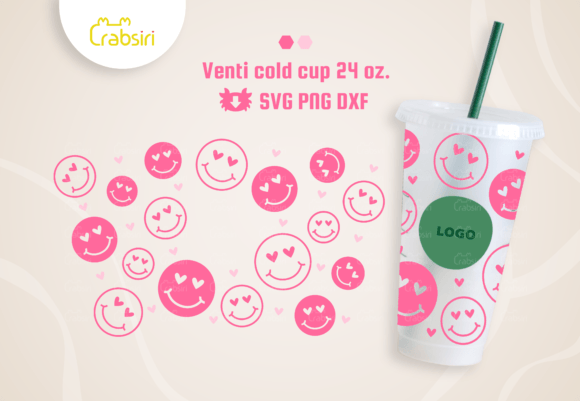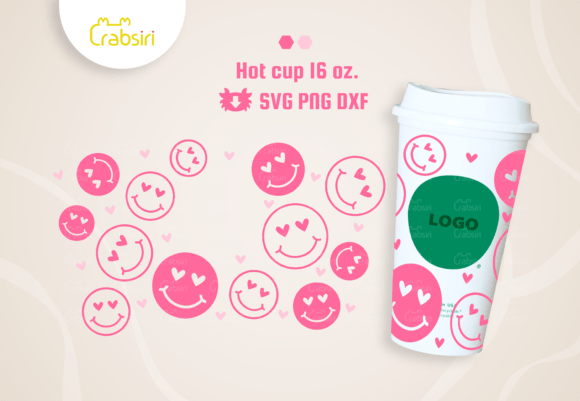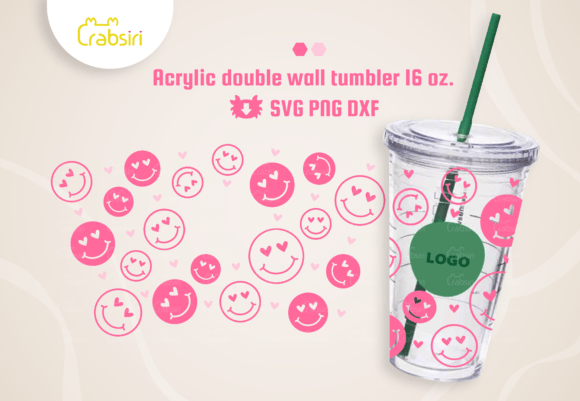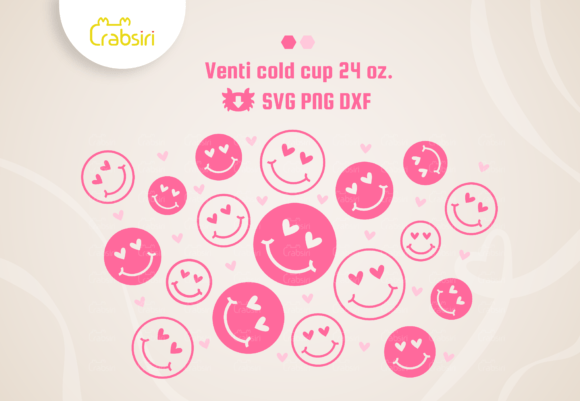
Smile Love 24oz Cold Cup No Hole
A Designer’s First Look: Warm, Simple, and Ready for Real Life
When I opened the Smile Love 24oz Cold Cup No Hole files—SVG, PNG, and DXF at 300dpi—I didn’t see just another craft graphic. I saw a quiet, confident little design with clear intent: soft positivity, no clutter, and zero pretense. It’s not loud or flashy—it’s the kind of embroidery file that feels like a handwritten note tucked into a handmade tote bag: gentle, intentional, and deeply personal. As someone who’s stitched hundreds of client projects—from baby onesies to boutique aprons—I immediately pictured it on a lightweight cotton tea towel, a relaxed-fit sweatshirt, or even as a small embroidered patch sewn onto a denim jacket pocket.
Where It Shines: Everyday Handmade Projects That Feel Thoughtful
The Smile Love 24oz Cold Cup No Hole isn’t built for maximalist statement pieces. It thrives in quieter, more intimate contexts: personalized gifts for teachers, new parents, or friends recovering from surgery; small-batch merchandise for a local coffee shop’s staff apparel; or Etsy listings where buyers search for “minimalist embroidery,” “sweet baby gift,” or “cozy kitchen decor.” I recently used a similar design (with slight tweaks) on a set of linen pillow covers for a nursery client—and the reaction was immediate: “It feels like *care*.” That’s the mood this file carries. It works beautifully as a machine embroidery design on stable, medium-weight fabrics like quilting cotton, canvas tote bags, or midweight french terry sweatshirts. On a well-stabilized baby onesie? Yes—especially if you simplify the stitch density slightly for delicate fabric. As an applique design? It holds up cleanly, especially when paired with a satin stitch border for subtle definition.
Where to Pause—and Why
This isn’t a one-size-fits-all embroidery file. Its charm lies in its simplicity, but that also means it demands thoughtful placement. Avoid using Smile Love 24oz Cold Cup No Hole on highly textured fabrics (like bouclé or heavy terry cloth) without testing first—the fine line work may blur. On stretchy knits? Only with cutaway stabilizer and careful hooping; running stitch elements could distort. Dark fabric backgrounds require strong thread color contrast—test your chosen thread in natural light before stitching the final piece. And while it’s pre-sized for the Venti Starbucks Cold Cup, don’t assume it scales cleanly down to a 3-inch hoop without checking detail integrity: tiny curves or tight corners may lose clarity at smaller sizes. If you’re planning holiday embroidery on thin flannel stockings or layered garments like reversible zip-up hoodies, run a test stitch on scrap fabric first—stitch density matters more here than flash.
What It Adds to Your Finished Product
Well-executed, Smile Love 24oz Cold Cup No Hole elevates perceived value—not through complexity, but through emotional resonance. Customers notice when something feels handmade *and* considered. That subtle balance between “smile” and “love” in the layout reads as warm but not saccharine, modern but not cold. For Etsy sellers and small shop owners, that translates directly to trust: buyers feel confident choosing your item because the design signals intentionality, not mass production. It supports brand consistency for makers who curate cohesive collections—think matching embroidered tea towels, napkins, and aprons for a kitchen-themed shop launch. And for commercial embroidery shops? It’s a reliable, low-risk add-on for clients wanting a tasteful accent on custom sweatshirts or corporate gifting items—no re-digitizing needed, no licensing guesswork (though always confirm terms before resale).
Practical Notes Every Embroidery Designer Should Keep Handy
- Always test first—on the exact fabric and stabilizer you’ll use in the final product.
- Check thread color contrast on both light and dark mockups; what reads clearly on screen may vanish on navy cotton.
- Review stitch density—if you’re embroidering on baby wear or delicate linens, reduce fill stitch density by 10–15% for breathability and drape.
- Confirm hoop size compatibility before loading into your machine—some versions of this design may sit close to hoop edges.
- Inspect small details at actual stitch size: are connecting lines clean? Does the curve of the “S” hold shape under tension?
- Use printable mockups to preview how Smile Love 24oz Cold Cup No Hole looks on real products—tote bag flat lays, sweatshirt chest placements, or pillow cover corners.
- Verify licensing before selling finished items or bundling the digital embroidery file with other design assets—this is especially critical for craft business owners and digital product sellers.
Final Thought: A Quiet Design With Real Weight
In a market flooded with overdesigned graphics, Smile Love 24oz Cold Cup No Hole stands out by doing less—and meaning more. It’s not a showstopper; it’s a steady hand on the shoulder. As a designer and reviewer, I’ve seen how these understated pieces build loyal followings: they become signature touches—on a favorite apron, a child’s lunchbox pouch, a wedding guest book cover. They don’t shout. They settle in. They belong. Whether you're preparing a batch of personalized gifts for a craft fair, building a cohesive line of nursery decor, or sourcing reliable embroidery files for your digital shop, this design earns its place—not because it’s trendy, but because it’s true. True to craft. True to care. True to the quiet confidence of making something by hand, with purpose.