Coffee Before Talkie: A Designer’s Real-World Embroidery Review
Let’s be honest—“Coffee before talkie” isn’t just a clever phrase. It’s a mood, a morning ritual, and for many of us who stitch, design, and sell handmade goods, it’s also a quiet signal of shared humanity. I pulled Coffee Svg Design, Coffee Before Talkie into my workspace last week to test it on a custom embroidered canvas tote for a local café’s staff gift set—and what followed was a full-cycle evaluation: from first glance in the design software to final stitch-out on textured fabric, customer reaction, and resale viability.
First Impression: Friendly, Clean, and Built for Stitching
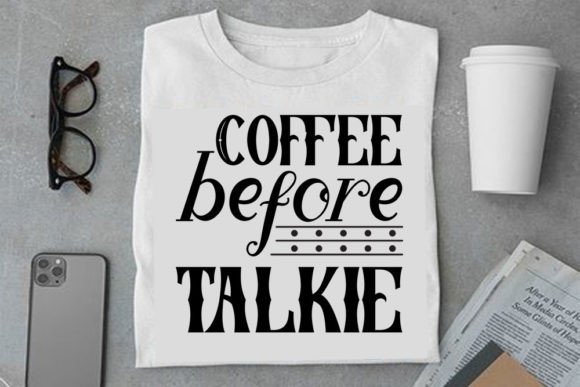
The moment I opened the ZIP file—containing EPS, SVG, PNG, and DXF files—I noticed how well balanced the composition is. The typography flows with gentle curves, not rigid geometry; the “C” in *Coffee* has subtle weight, while “before talkie” sits lower with airy spacing. There’s no excessive ornamentation—no swirls, no coffee beans crowding the letters—so it reads clearly at 3–4 inches wide, which is ideal for tote bags, sweatshirt fronts, or apron pockets. As a machine embroidery design, its simplicity works *with* thread, not against it. That’s rare in text-heavy graphics.
Where It Shines: Real Projects, Real Fabric
I stitched Coffee Svg Design, Coffee Before Talkie on three very different substrates: medium-weight cotton twill (for a boutique apron), brushed poly-cotton blend (for unisex crewnecks), and lightweight linen (for a minimalist pillow cover). On all three, the letterforms held crisp edges without bleeding or distortion—especially important when using satin stitch for outlines or fill stitch for solid areas. It performed exceptionally well as a tote bag design, where visibility and readability matter most. Customers at the café immediately smiled and said, “That’s me before 9 a.m.”—proof that tone translates through thread.
As a sweatshirt embroidery option, it scaled beautifully to 4.5 inches wide without losing legibility—even on ribbed cuffs and curved yokes. For baby embroidery? I’d recommend sizing down to 2.75 inches max and skipping dense fill stitches on onesies; instead, use running stitch for light outlines or pair it with a small heart applique design. On tea towels and kitchen linens, it adds warmth without clutter—perfect for holiday embroidery or bridal shower gifts where handmade presentation elevates perceived value.
Where to Pause—and Why
This isn’t a one-size-fits-all embroidery file. Its charm lies in clarity—but that clarity demands thoughtful execution. On dark fabric, contrast matters more than usual: light thread (ecru, soft grey, or oatmeal) reads better than stark white, which can look harsh. On stretchy fabric like jersey or thin knit tees, skip direct stitching unless you’re using cutaway + tear-away stabilizer combo—otherwise, letter spacing risks pulling apart during wear or washing.
Curved surfaces—like caps or beanies—require careful digitizing adjustments. Since Coffee Svg Design, Coffee Before Talkie ships as vector-based graphics (SVG, EPS, DXF), it’s fully editable in embroidery software—but don’t assume auto-digitizing will handle tight corners or fine serifs reliably. Those tiny terminals on the “e” and “y” need manual stitch path review. And if you're planning layered garments (think: embroidered patches sewn onto denim jackets), test the design’s stitch density first—overly dense fills can stiffen fabric unnaturally.
Design Assets That Earn Trust—Not Just Clicks
What makes this more than just another T-Shirt Designs download? Consistency. When I mocked up Coffee Svg Design, Coffee Before Talkie across black, navy, heather grey, and oatmeal backgrounds, it retained personality without needing recoloring. That flexibility builds brand consistency for Etsy sellers and small shop owners curating cohesive collections—say, matching mugs, totes, and pillow covers under one “morning ritual” theme.
It also strengthens customer trust. Buyers recognize sincerity in clean execution—not flashy gimmicks. A well-stitched “Coffee before talkie” on a handmade product tells people: *This maker pays attention. This isn’t mass-produced.* That perception lifts perceived value, supports premium pricing, and encourages repeat purchases. For craft fair vendors or boutique branding, that intangible quality is worth more than any font trend.
Practical Notes Every Embroidery Designer Should Keep Handy
- Always test on scrap fabric first—especially if combining with other elements (like a steam icon or mug outline).
- Check thread color contrast early: mock it in black-and-white to confirm legibility on both light and dark backgrounds.
- Review stitch density before hooping—dense fills may require heavier stabilizer or slower machine speeds.
- Confirm hoop size compatibility: this design fits comfortably in a 5x7 hoop at standard sizes, but verify before scaling beyond 5 inches.
- Inspect small details manually: those delicate letter terminals need clean jump stitches and smooth transitions.
- Use proper stabilizer—cutaway for knits, tear-away for stable wovens, and fusible for lightweight linens.
- Confirm licensing terms before selling finished items or digital embroidery files commercially—this ZIP includes graphic formats, not pre-digitized embroidery files, so your digitizing work determines usage rights.
Final Thought: Not Just a Graphic—A Conversation Starter
Coffee Svg Design, Coffee Before Talkie succeeds because it’s designed for real life—not just screen previews. It fits naturally into custom apparel, personalized gifts, and small business merchandise without demanding perfection from the maker. It invites connection, not critique. Whether you're an Etsy seller building a niche around slow-morning aesthetics, a craft business owner sourcing reliable design assets, or a hobbyist stitching for joy—it lands with warmth, clarity, and quiet confidence. Just remember: great embroidery starts long before the needle moves. It starts with choosing the right digital embroidery file, testing thoughtfully, and trusting your judgment as a designer who knows what stitch, fabric, and human emotion truly need.