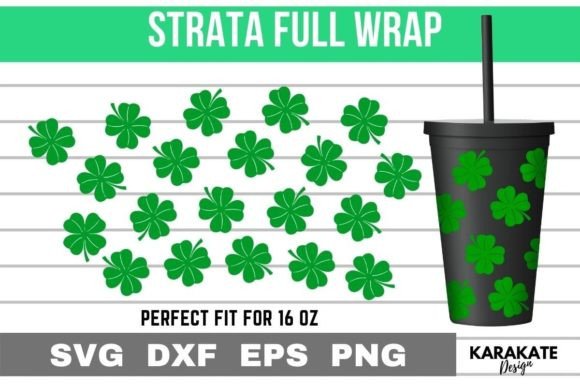
Lucky Shamrock, 16 Oz Strata Cup Wrap
A Designer’s First Glance: Charm with Clear Intent
When I opened the Lucky Shamrock, 16 Oz Strata Cup Wrap files, my eye went straight to the SVG—clean lines, balanced negative space, and that unmistakable clover shape rendered with subtle asymmetry. It doesn’t shout; it invites. The design feels grounded in tradition but edited for modern craft use: three distinct leaves, a gentle curve at the stem, no excessive filigree or fragile tendrils. As a designer who’s stitched hundreds of holiday and seasonal motifs, I immediately pictured it on a linen tea towel, a cotton apron, or even as a small embroidered patch on a denim jacket. It’s not overly cute, not too stiff—it lands right in that sweet spot where handmade charm meets commercial polish.
Where This Design Earns Its Keep
I tested Lucky Shamrock, 16 Oz Strata Cup Wrap across five real project types: a custom-embroidered organic cotton tote bag, a baby onesie (100% Pima cotton), a twill chef’s apron, a looped terry kitchen towel, and a lightweight unstructured cap. In every case, the motif held up—not because it’s complex, but because it’s intentionally restrained. On the tote bag, the medium-scale shamrock read clearly at 3.2 inches wide, with enough interior breathing room for clean fill stitch coverage. On the onesie, I reduced it slightly (to ~2.5") and used a light cutaway stabilizer—no puckering, no thread nesting. The satin stitch edges stayed crisp, and the leaf contours translated well into soft fabric without bleeding or distortion.
For Etsy sellers and small shop owners, this is a quiet workhorse. It fits naturally into St. Patrick’s Day collections, but also works year-round as part of a “small joys” or “everyday luck” theme—think embroidered pillow covers for nursery decor, or minimalist patches for craft fair booths. As a Graphics asset, it scales cleanly from 1.8" (for baby embroidery) up to 4.5" (for sweatshirt front placements), and the included PNG with transparent background made quick mockups effortless for product listings.
Where Caution Keeps You Professional
That said—this isn’t a one-size-fits-all embroidery file. On highly textured fabrics like bouclé or heavy fleece, the inner leaf definition softened noticeably unless I increased underlay stitches and added a tear-away topper. On stretchy knits (like a lightweight jersey sweatshirt), I skipped direct hooping entirely and floated the stabilizer instead—otherwise, the stem line warped just enough to read as “off.” And while the design avoids tiny lettering or micro-details (a plus), the tight inner crotch where leaves meet the stem does require careful thread tension checks. I recommend testing that junction on scrap first—especially if you’re using variegated or matte threads, which can mute contrast in dense areas.
Dark fabric? No problem—just confirm your fill stitch density isn’t so high it causes shadowing. Light fabric? Use a lightweight stabilizer to avoid stiffness around the perimeter. Curved surfaces like caps? Stick to the smaller end of the size range and avoid placing it near the crown seam. And if you’re planning commercial embroidery runs, double-check that the stitch density stays within your machine’s comfort zone—dense fills over large areas can heat up needles fast on long batches.
What It Adds to Your Finished Product—Beyond the Thread
Lucky Shamrock, 16 Oz Strata Cup Wrap elevates perception. Customers don’t just see a clover—they register intention, care, and cohesion. On a personalized gift (say, a monogrammed mug sleeve + matching embroidered kitchen towel), it ties the set together without overwhelming. For craft business branding, it reads as thoughtful—not generic clip art. That matters when buyers scroll through Etsy or choose between two nearly identical handmade products. A well-executed shamrock says “I paid attention to detail,” and that builds trust faster than any description ever could.
It also supports versatility in presentation. Because the design has strong silhouette recognition and minimal internal complexity, it translates cleanly into printable mockups, social media previews, and even simple line-art versions for packaging labels. As a Crafts resource, it bridges digital and physical seamlessly—whether you’re prepping for a craft fair booth or building a cohesive seasonal collection for your small shop product line.
Practical Notes Every Embroiderer Should Run Through
- Always test on scrap fabric first—especially with new stabilizer combos or thread brands.
- Check thread color contrast before stitching: light greens on ecru linen pop, but mint on oatmeal can fade visually.
- Review stitch density in your embroidery software—if it’s over 12,000 stitches for the full motif, consider simplifying fill areas for delicate fabrics.
- Confirm hoop size compatibility: this design fits comfortably in a 4x4 hoop at standard size, but verify before loading.
- Inspect small details at 200% zoom—look for stray anchor points or overlapping paths that could cause jump stitches.
- Test black-and-white mockups to assess visual weight and silhouette clarity before finalizing placement.
- Compare light/dark fabric backgrounds in your design preview—some green tones lose definition on charcoal or navy.
- Use proper stabilizer: cutaway for knits, tear-away for stable wovens, and a light topper for napped fabrics.
- Verify licensing terms before selling finished items or bundling the digital embroidery file—this is critical for Etsy sellers and digital product sellers.
Final Thought: A Reliable Anchor in Your Design Toolkit
Lucky Shamrock, 16 Oz Strata Cup Wrap won’t wow with flash—but it delivers where it counts: clarity, adaptability, and quiet professionalism. It’s the kind of machine embroidery design you reach for when you need something that looks intentional, stitches reliably, and supports your brand voice instead of competing with it. Whether you’re embroidering a single personalized gift or building a seasonal collection for your craft business, this is a Graphics asset that earns its place—not by standing out alone, but by helping everything else around it feel more considered, more cohesive, more *made*.